
I was recently asked by another teacher friend if there was any specific way I go about organizing my writing when I go about writing a book. She said she was teaching her students about organizing their writing and would love to tell her kids about how a real author does it.
First off, THANK YOU FOR CALLING ME A REAL AUTHOR! (insert sobbing emoji) I’ve been struggling with imposter syndrome lately and had a real “what’s the point” attitude about writing my stories. No wind in my sails. Sad. Depressed.
Still writing, but in a state of crying, “Why bother?!” into the void.
Back to the point – No one has ever asked me this question before. I’ve asked a lot of others what their methods are and even searched out how some of my favorite authors go about organizing their work, but never really thought of MY method. So, here’s what I came up with.
1st – Inspiration/Idea
Like with all writing, first comes the idea – the inspiration – the jumping off point.
I typically like to marinate in the idea for a while. This is the “day dream” and “make believe” state. I start adding to the initial idea though creating a Pinterest board dedicated to the story (it’s usually a secret board… I’m secretive during this stage), creating an audio playlist full of songs that add to the vibe I’m going for and mentally flesh out main characters and their characteristics.
Note: Absolutely no writing has happened at this point.
2nd – Major Lists
After I’ve sat in my idea (roughly 1 week to nearly a month), I begin making lists. I’ll write down a character and then list everything there is to know about that character from their birth to their tragic backstory to their favorite things and greatest dislikes.
I’ll write down a place (a town/city/prominent building) or a people (whether they are elves or just a people who lives in a certain region) and list everything I know about that them. What is it known for? What do the buildings look like? What is the food like? How do the people dress? Is there a wealthy part of town? a Poor part of town? How do you know you’ve entered that part of town? Is there a king/queen? Are they into the arts? Or known for being soldiers?
This is my brain-dump stage and I used these lists and refer back to them OFTEN throughout the remainder of my book. *These details are subject to be altered at any time, but if they do, I keep a record of those changes inside the lists themselves so it’s still exactly where I naturally go to search for those things.
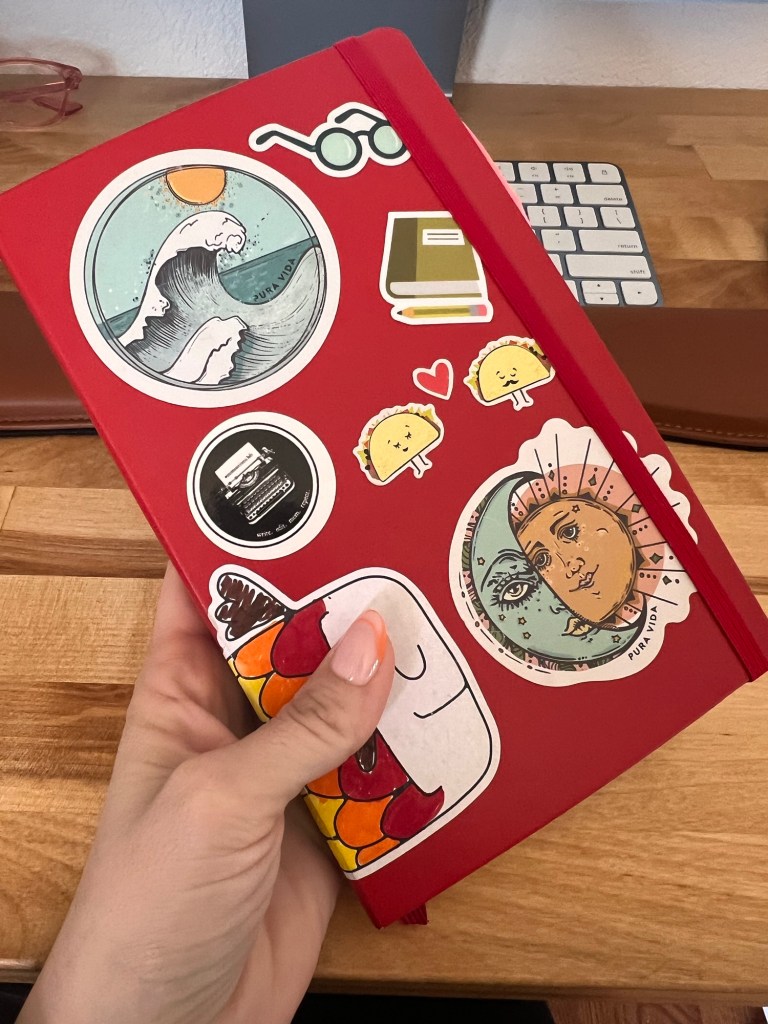
Note: I chose a Bullet Journal/notebook to write this all down and keep it in one spot. I like to use pen and paper during this stage. Other than Pinterest and a playlist, no actual writing/typing happens for me during this stage.

3rd – Scene Bank
By this point, I typically have some very specific scenes that are vital to the story/plot that I KNOW have to be in the book. The important ones come to me first and either serve to propel the story forward or drive character development. *Pro Tip: The best scenes do both.
I start writing these scenes down, first in a list form (I like lists), and then eventually, onto Post-Its.
Note: Writing/typing can and will start at this stage for me. I can’t help but jot down a good scene when it comes to mind – the fresher, the better!
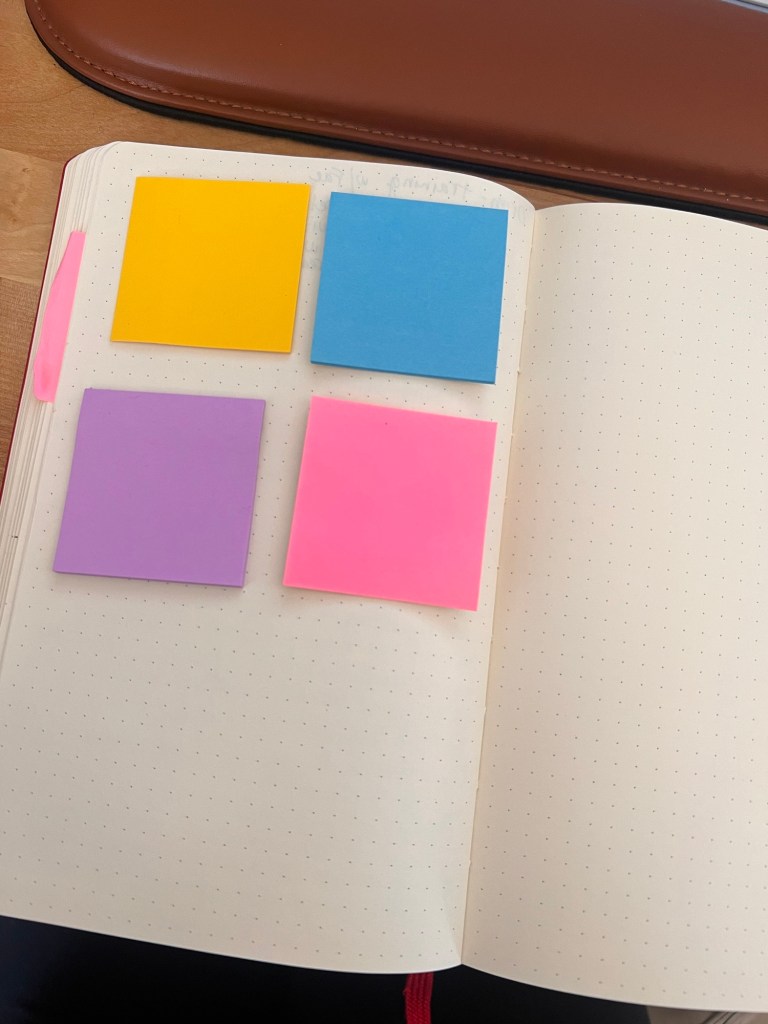
*I like the small ones the best because I can fit multiple small Post-its onto one page in my Bullet Journal. I label a handful of pages as “Plot Pages” and then begin the next stage….
4th – Jigsaw it into a Story
Using the scene Post-its from the previous step, I start putting them into an order that makes sense. I normally know the scenes that I want to happen first, somewhere in the middle, and I always start with the end in mind, so it’s just a matter of piecing it together into a “that makes sense” progression.
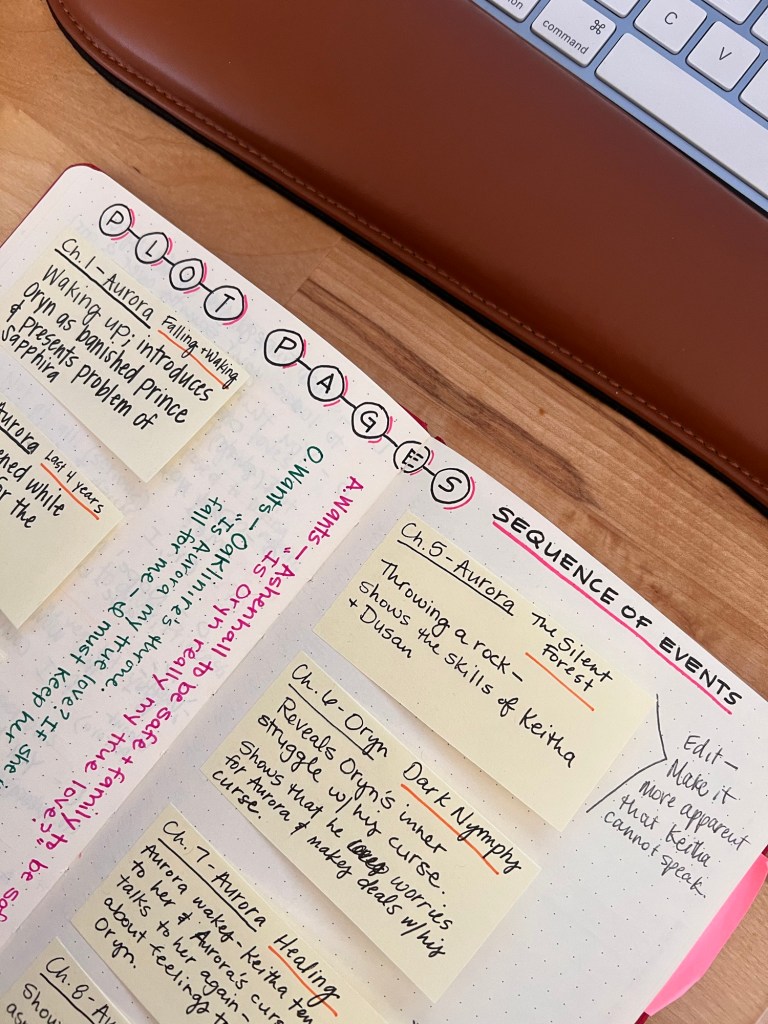
Note: Definitely writing/typing during this stage. It helps when I’m just starting to piece things together.
The final step, and arguably the most difficult step is…
5th – WRITE.
The last step is to write the dang thing!
This is the hardest part. The trick here, when you have really nothing other than writing to do, is to keep going. Don’t lose focus. Keep putting words on paper (or in my case, typing words into the computer) and if you’re lucky, you won’t come up for air while you’re in this writing/drafting stage. You’ll get lost in it and won’t be able to focus on much of anything else until you get to write the words THE END.
But… PLOT TWIST! There’s more steps…
6th – ReRead & Revise
Did I say writing was the hardest part? Oops. I lied.
Once you finish writing the book, you then have to go back, re-read it and revise. This means you become your own personal critic. You pick it apart. Is there a way you could’ve written that better? Fix it. Is there a part that just doesn’t make any sense now that you’re reading it with fresh eyes? Yeah – fix that too. Did you really spell THAT word THAT wrong? FIX IT.
I do this revising in batches. First one is for stupid, obvious spelling and grammatical mistakes like I mentioned above. Then another round for descriptions/prose. Another for ensuring I’m staying true to characters throughout and that information at the beginning of the story still line up once you make it to the end of the story. This part takes a while.
7th – BETA Readers & Constructive Feedback

Once I feel that the story is at its best, I send it out to testing readers – AKA: Beta Readers. I ask for specific feedback (I recently did this through a Google Form – I will do another follow-up post on what questions I asked to help me guide my final revisions if you are interested). Using that specific feedback, I….
8th – Surprise, Surprise! REVISE!
Hit revisions. Again.
I took the time to break down exactly what I wanted to revise for what I’m calling my “Final” revision and made a full on spreadsheet to keep track of it. *I will share more details on that in a later post as well.

The End… Kind of…
While this might mark the finished version of the book for you, the author, it’s only the beginning of the querying/finding a literary agent journey. But that’s a whole other process that I’m still learning to navigate and have not yet mastered.
To my teacher friend – I hope this answers your questions about how a “real author” organizes their writing.
To everyone else, I hope this helps you on your writing-a-book journey! Keep in mind that everyone is different and honestly, every book is different. This is just a rough look at the steps I take when I’m working on a new project. I hope you benefit from my experience.
Allie Marin
P.S. Write, Honey, write!
 Allie Marin